Start with the customer: Sam Rowse on rethinking freight productivity
%20(1).png)
Start with the customer.
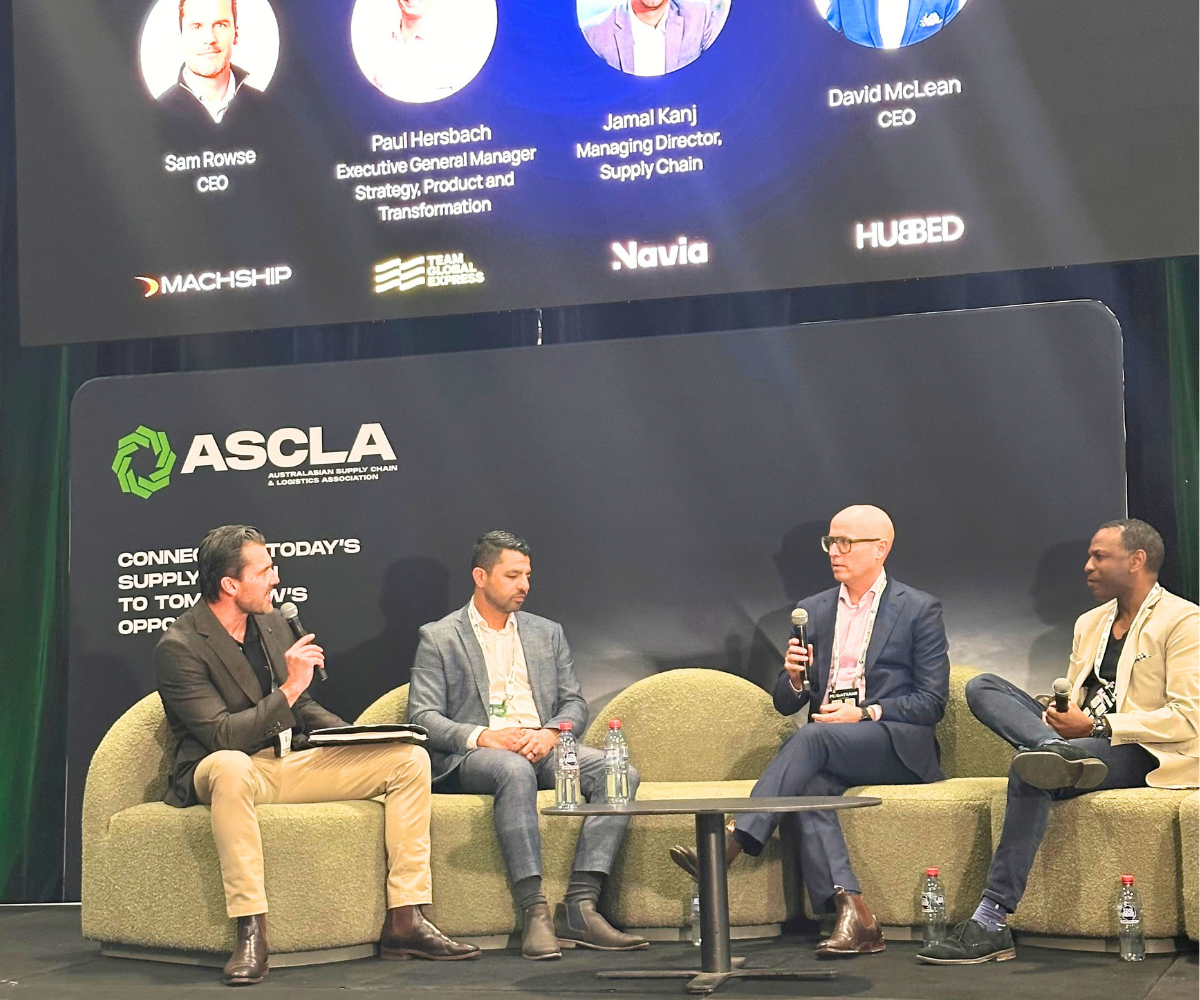
Speaking with ASCLA Independent Director Rakesh Bandipelli, Sam explored what the Freightability Report tells us about reliability, carrier performance, freight costs and changing customer expectations. One of his key points was to look at those decisions through the customer first: understand what they actually need from the delivery, then use that as a lens for the lane, service and carrier decisions that follow.
Reliability is changing the conversation
Across the network, average DIFOT was around 78%, meaning roughly one in five deliveries did not arrive in full and on time. The average also hides a wide spread, with the strongest carriers in the high 90s and a long tail sitting well below. Same-day services missed their promised day 30% of the time, compared with 19% for non-premium services.
For a customer paying more for speed, that raises a fair question about what they are actually paying for. "With the premium options, you're paying a premium to increase your chance of a mis delivery," Sam said. The cost of a failed delivery also runs well beyond the freight charge, from redelivery and customer service time to lost repeat business. InB2B it travels further still, disrupting warehouse staffing, store readiness and the next promise down the chain. Freight productivity cannot be measured on the cheapest rate or the fastest service alone. It has to account for whether the delivery promise is kept.
From choosing carriers to orchestrating them
The average Australian B2B shipper uses 5.4 carriers, which reflects the reality of the market rather than simple complexity. Different carriers perform differently across geographies, freight types and lanes, so the conversation naturally moved from carrier selection to orchestrating the whole network.
"It's not necessarily about going for the best carrier," Sam said. "It's the best carrier for the lane, for the job, to meet the customer's expectations."
That is orchestration in practice. The opportunity is to get more from the carrier mix you already have, matching each movement to the right service on the right lane using actual DIFOT, customer expectations and the full cost of the movement rather than relying on advertised speed or a rate card alone. It is the difference between simply having a multi-carrier network and actively managing how that network performs.
And then there is AI
There is genuine potential for AI in freight, especially in flagging which shipments are likely to miss so someone can act before the customer notices. But by Sam's estimate only around 6 to 6.5% of freight is managed with that kind of insight today, which shows how much groundwork on data still comes first. And technology does not remove the human element.
"AI is not going to ring a customer at four o'clock on a Friday afternoon telling them their freight's going to be delayed and try to smooth over the relationship," Sam said.
Work backwards from the customer
The lens Sam described starts with understanding what the customer actually needs from the delivery, then looking at how the relevant lanes, services and carriers perform against that expectation. Technology can support those decisions, giving businesses a way to manage their existing carrier mix around the outcome they are trying to deliver.
" Focus on the customer and work your way back. At the end of the day, it's a shared customer. Your customer is the same as the carrier's customer.
Watch the full fireside chat below for the conversation in full.