From the Persian Gulf to an Australian Truck: The Supply Chain of Fuel Most People Don't Know About
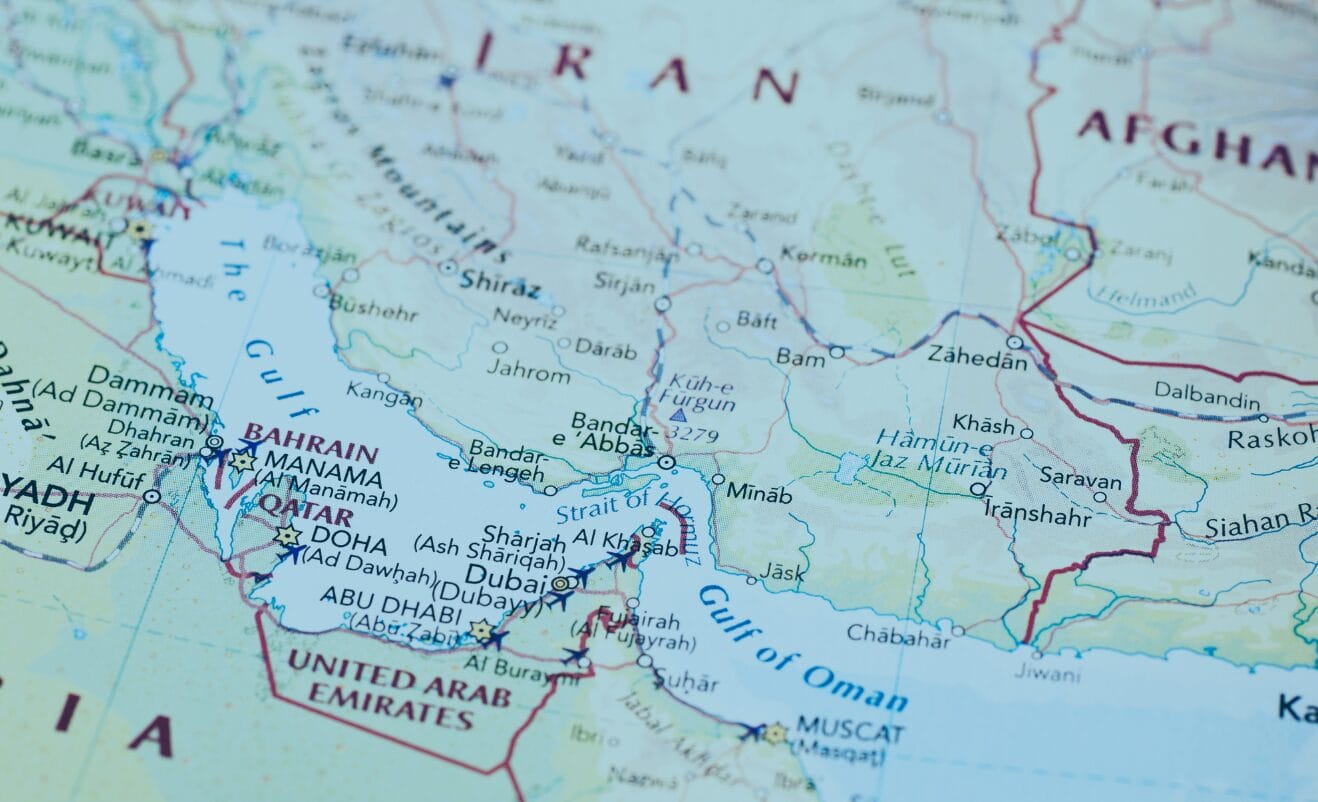
Consider the last time a delivery truck pulled out of your warehouse. The diesel in its tank didn't begin at a service station on the way out of the industrial estate. It didn't begin in Australia. It began, in all likelihood, as crude oil extracted somewhere in the Persian Gulf, and it took weeks, multiple countries, and an engineering system most people have never thought about to arrive in the form you recognise.
Most commentary on rising fuel costs focuses on the Strait of Hormuz, the oil price, and geopolitical risk. That's the macro story. The operational story, the one that actually explains why disruptions to shipping lanes in the Middle East impact the cost of moving freight across Australia, is less frequently told. Here's how it works.
Where Australia's Fuel Actually Comes From
Australia imports approximately 90% of its refined fuel needs. That figure reflects decades of structural decline in domestic refining capacity, a trend that accelerated in 2021 when BP's Kwinana refinery and ExxonMobil's Altona refinery both closed permanently.
Two refineries remain operating: Ampol's Lytton facility in Brisbane and Viva Energy's Geelong refinery. But together they cover less than 20% of national demand. For the vast majority of its fuel, Australia depends on imports shipped from overseas.
The primary sources are South Korea, which supplies roughly 29% of Australia's refined fuel imports, Singapore at around 20%, and Malaysia at approximately 13%. These aren't arbitrary trading relationships. They reflect where large-scale refining capacity exists and what crude oil is available to feed it.
Here's the key point: these refineries aren't just geographically close to Australia. They're specifically configured to process the crude oil that's available to them. And that crude oil largely comes through the Strait of Hormuz.
Why the Strait of Hormuz Matters More than the Headlines Suggest
The widely cited figure is that around 20% of the world's oil passes through the Strait of Hormuz. That's correct. However, it downplays the structural importance for Australia.
What matters isn't just the volume. It's that the Asian refineries supplying Australia are calibrated to process Gulf crude specifically.
Refineries are not generic processing plants. They are highly engineered facilities (catalytic crackers, hydrotreaters, distillation columns) configured based on the properties of the crude oil they are designed to process. Gulf crude has a particular grade: a specific sulphur content, density and viscosity that determine how the entire facility is set up.
If the supply of that crude is disrupted, these refineries can't simply switch to another source and continue operating. Moving to crude from a different region requires reconfiguring processes, adjusting catalyst mixes, and sometimes making physical modifications to equipment. That's not a quick task. Industry estimates for significant crude substitution take weeks, and in some cases, months.
This is the key story most coverage isn't telling. The Strait of Hormuz matters to Australia not just because oil passes through it, but because our main fuel suppliers are built around that oil. A disruption isn't just a price shock that clears when the lane reopens. It's a supply chain problem with real lag effects.
The Journey from Wellhead to Australian Port
To understand why fuel cost disruptions take time to flow through, and take time to clear, it helps to trace the full journey.
Crude oil is extracted at wellhead facilities across the Gulf region, transported by pipeline and tanker to export terminals, passes through the Strait of Hormuz, and crosses the Indian Ocean to refinery complexes in South Korea, Singapore, or Malaysia. There, it's refined into products (diesel, petrol, aviation fuel) and loaded onto tankers for the journey to Australia.
Australia's fuel import infrastructure is spread across six main terminal locations: Melbourne, Brisbane, Sydney, Perth, Adelaide, and Newcastle. Each terminal has storage capacity and links to the national distribution network. There is no significant Australian-held strategic reserve - no equivalent to the stockpiles that enable other countries to buffer against supply disruptions for weeks or months.
From extraction to terminal arrival, the total transit time takes several weeks. And that's before the fuel has moved a metre on Australian soil. Every step in the chain (extraction rates, tanker availability, refinery throughput, shipping capacity) is a potential constraint that adds time and cost.
That lag is why disruption upstream doesn't produce a clean, immediate price movement that settles. The system takes time to reflect what's happening in the Gulf. And it takes time to recover.
What This Means Once Fuel Leaves the Terminal
Once refined fuel arrives at an Australian import terminal, the domestic distribution network takes over. Fuel is transported by road tanker to bulk depots around the country, and from those depots to service stations and direct commercial users, including transport and logistics operators whose trucks carry your freight.
At every stage, the wholesale fuel price is integrated into the operating costs of each carrier across Australia's freight network.
This is where it becomes practically important for freight managers. The fuel surcharges carriers apply aren't just based on the price at the pump. They're calculated from published benchmarks, prices set by organisations like the Australian Institute of Petroleum, and each carrier has its own formula for turning a benchmark movement into a surcharge rate. Some use percentage-based models. Some use flat rates. Update frequencies differ: some carriers revise weekly, others monthly.
The result is that two carriers transporting the same freight in the same week may charge significantly different surcharge rates; not because of anything unusual about your freight, but because of the methodology each carrier uses to calculate costs. For shippers who aren't systematically tracking surcharges across their carrier network, these cost differences are easy to overlook and tend to add up.

The Supply Chain Doesn't Reset Overnight
Understanding the supply chain isn't an academic exercise; it's about understanding why this disruption won't be resolved in the next news cycle.
The refinery calibration challenge, the transit lag and the distributed terminal structure are structural features of how Australia accesses fuel. When something affects the upstream supply, the downstream effects take time to appear and to clear. Businesses that manage freight costs well during volatile periods aren't the ones reacting to each surcharge notice as it arrives. They're the ones with a clear view of what they're actually paying (across their full carrier mix, across all lanes) at all times.
When external costs are moving for structural reasons, that kind of visibility isn't a nice-to-have. It's what separates reactive freight management from informed freight management.
Insights & Articles
.jpg)

%20(1).png)