
Peak season has a way of sharpening focus.
Volumes rise, teams focus, and freight moves faster through the organisation. For many businesses, outcomes are delivered exactly as planned. But once volumes ease, freight leaders gain something they rarely have during peak itself: distance.
That distance makes it easier to see not just what happened, but how it happened and where effort, process and systems carried different parts of the load.
This post-peak moment isn’t about critiquing performance. It’s about extracting insight while it’s still fresh.
Peak season is a stress test, not a verdict
Peak season doesn’t change how an operation works. It reveals it.
When volume, variability and time pressure increase simultaneously, existing strengths hold and existing limits become clearer. Processes either scale smoothly or require intervention. Systems either provide timely visibility or lag behind decision-making. Teams either operate consistently or lean heavily on experience to bridge gaps.
None of this implies success or failure. Getting through peak doesn’t mean an operation is optimised, just as friction doesn’t mean it’s broken.
Peak season simply offers a concentrated view of how well the freight function absorbs change.
What becomes visible when pressure rises
Looking back after peak, certain patterns tend to stand out. For example:
- Visibility may have existed, but not always when it was needed.
- Exceptions may have been managed well, but required more manual checking than expected.
- A small number of people may have carried disproportionate responsibility because they knew where to look, who to contact, or how to work around limitations.
These patterns don’t show up as incidents or failures. They show up as effort.
And effort is informative. It highlights where consistency depends on experience rather than design, and where scale introduces friction that isn’t obvious under normal conditions.
Those signals are easy to dismiss once urgency returns, but they’re most valuable when there’s still time to act on them.
Freightability: designing for variability, not stability
The patterns that surface under pressure point to a broader question: how well is the freight operation designed to absorb change?
This is where Freightability comes in.
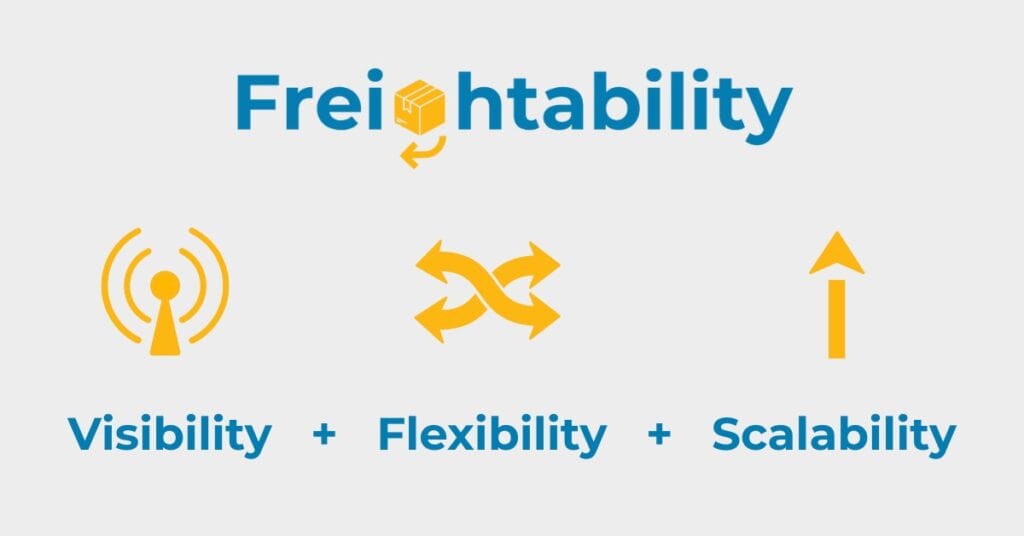
Freightability describes an operation’s ability to handle variability in volume, carriers, routes and exceptions, without a corresponding increase in effort. It’s the difference between systems that technically work and systems that continue to work as conditions change.
A freightable operation maintains visibility as volume increases. It scales processes without multiplying manual touchpoints. And it supports decision-making with timely, accessible data, rather than relying on experience to fill gaps.
Peak season doesn’t define Freightability. It simply makes its presence, or absence, harder to ignore.
Using post-peak clarity to make what comes next easier
The period after peak is brief, but valuable.
It’s one of the few times freight leaders can reflect with clarity rather than urgency. The volume has eased, the signals are still fresh and there’s space to distinguish between what scaled naturally and what required extra effort to sustain.
That clarity doesn’t last. As new priorities emerge and attention shifts, the insights peak season revealed are easy to rationalise away. What felt like a signal becomes “just how peak works.”
But the difference between a freight operation that copes and one that scales is rarely decided during peak itself. It’s shaped in these quieter windows, when there’s time to act deliberately rather than reactively.
Improving Freightability isn’t about preparing for a single season. It’s about reducing reliance on effort, increasing confidence in visibility and control, and making variability easier to manage across the year.
Peak season will always return. The opportunity now is to ensure the next one demands less from the people running it.
At MachShip, we spend a lot of time thinking about what makes freight operations resilient under pressure, and how Freightability is built into systems, not carried by individuals.
If you’re reflecting on what peak season revealed and how to apply those insights moving forward, you can stay connected with MachShip for the latest perspectives and stories shaping how freight teams handle complexity with confidence.